

Module 4

The most effective response is a structured one. When a student raises a concern, it can feel overwhelming. Faculty are often balancing many responsibilities: grading, placement coordination, deadlines, and ongoing student support. When concerns arise unexpectedly, it may be unclear what the next step should be.
Having a clear, pre-established framework helps remove that uncertainty. A structured approach allows faculty to respond consistently, efficiently, and thoughtfully when concerns arise. Rather than deciding what to do in the moment, the framework provides a roadmap that helps ensure the right actions occur at the right time.
In many cases, this structure not only protects the student, but also supports faculty by reducing ambiguity and preventing situations from escalating unnecessarily.
The Faculty Response Pathway
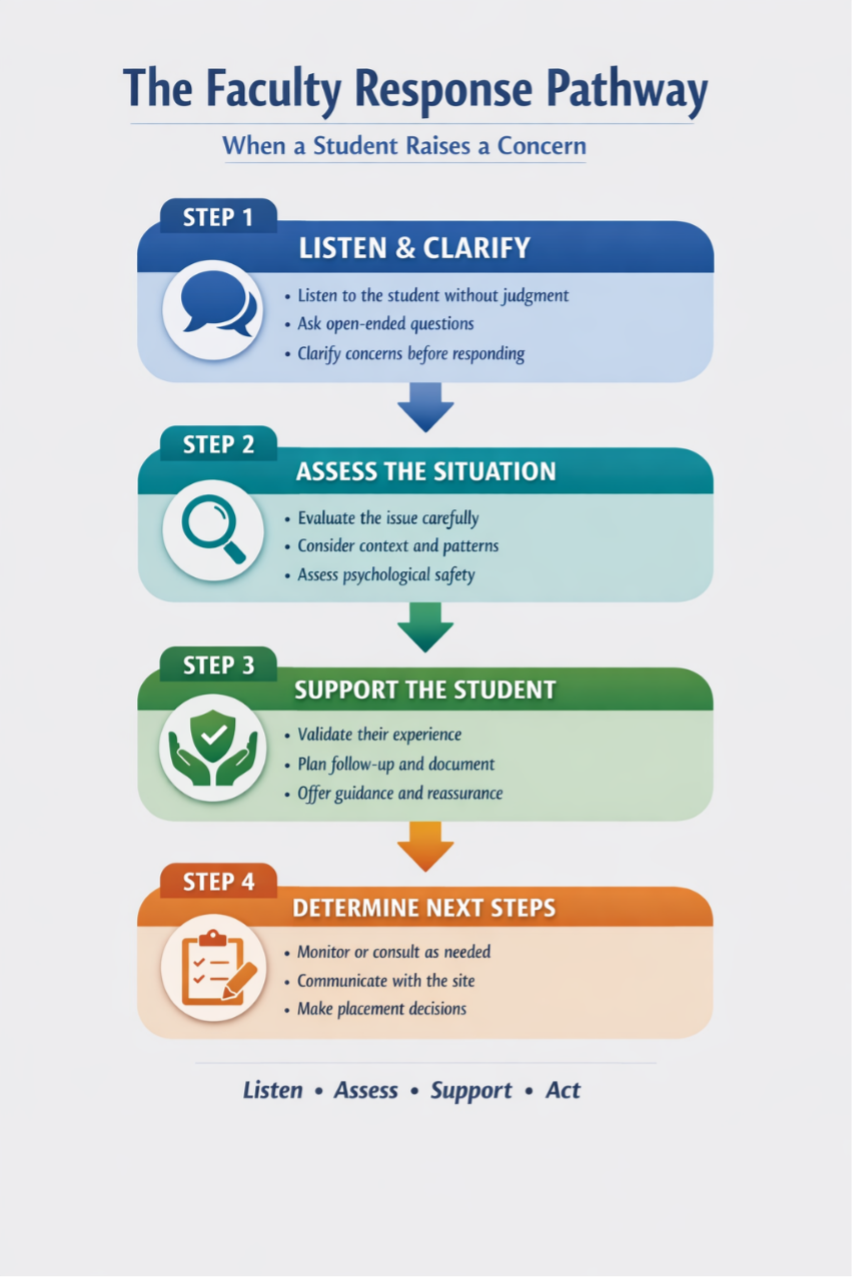
1
Listen and Clarify
Schedule a private conversation and gather information.
Questions to ask:
Can you describe what has been happening?
When did you first notice this pattern?
How often does it occur?
How is it affecting your learning?
2
Assess the Situation
Evaluate the scope and severity before deciding on a course of action.
Consider:
Pattern and frequency
Power dynamics
Student psychological safety
Potential learning impact
Not every concern represents bullying, but patterns matter more than isolated events.
3
Support the Student
Balance protecting student learning with maintaining collaborative site relationships.
Faculty support may include:
Clarifying expectations with the site
Increasing monitoring and check-ins
Helping the student prepare for difficult conversations
Documenting concerns
Students should not feel responsible for managing the situation alone.
4
Determine Next Steps
Depending on severity, choose the appropriate level of response.
Next steps may include:
Monitoring the situation
Contacting the site supervisor
Consulting with program leadership
Adjusting placement expectations
Removing the site from future placements
Important Principle
Student safety and learning must remain the priority.
Student safety and learning must remain the priority.
Faculty should document concerns and conversations related to placement environments. Each program should have their own system for documentation. Documentation helps track patterns, supports program decision-making, and protects both students and faculty if concerns escalate.